




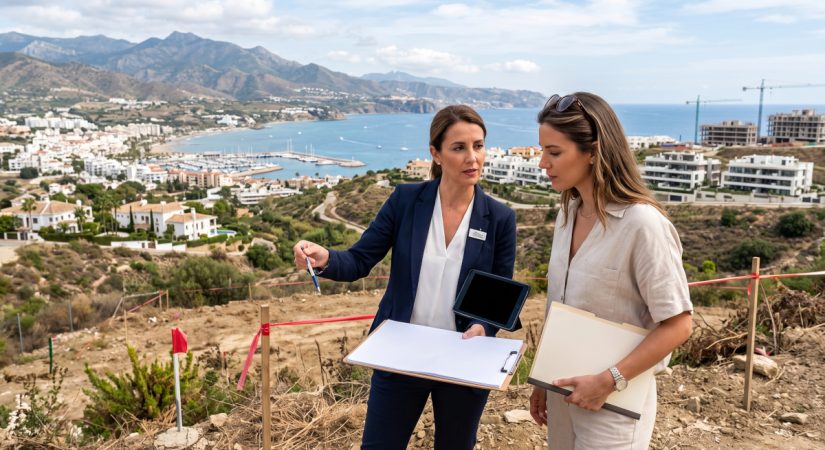
Buying a plot of land is a major financial decision. In recent years, interest in acquiring plots in Andalusia has grown considerably. Many people are looking for spacious, quiet places. In particular, the Costa del Sol area attracts many investors and private buyers. They want to build a custom home or simply enjoy nature and everything that living in Estepona or its surroundings has to offer.
But before deciding to buy rural land in Andalusia, it is essential to understand the urban planning risks. The land market has strict rules. You cannot buy a plot and start building right away. Regional legislation sets the limits. Getting to know the LISTA Law (Law for the Promotion of Territorial Sustainability in Andalusia) is the first step. Understanding this law will help you avoid legal surprises and unexpected expenses.
Can You Build on Rural Land? What the Law Says
The main question buyers have is clear. Many ask whether it is possible to build on rural land. The answer requires analyzing the legal framework.
The current LISTA Law (Law 7/2021) changed the way land is organized. It no longer uses the traditional classification of the former LOUA law. Terms such as “non-developable land” are no longer accurate. Current regulations refer to rural land and establish different categories. They also set different protection regimes for each plot.
To know whether you can build on rural land, you need to distinguish between two large groups. First, there is rural land preserved by territorial or urban planning regulations. This type of land has the highest level of protection. Then there is the rest of the rural land.
The general rule is the preservation of the environment. The possibility of building always depends on one key factor. The use you plan to give the land must be fully compatible with the urban planning and sector-specific regulations applicable in that municipality. There are strong legal and environmental limitations. Rural land is intended to retain its natural character, not for urban expansion.
What You Can Do on Rural Land: Permitted Uses
Buyers need to know exactly what can be done on a rural plot before paying any deposit. The activities legally permitted on this type of land are very clearly defined.
As a general rule, the permitted uses are those derived from the very nature of the land. This covers agricultural and livestock uses. Forestry activities and the installation of renewable energy projects are also included. For these activities, buildings necessary for their development are allowed, such as agricultural warehouses or tool sheds. But always under strict municipal control.
As for residential use, the options are limited. Building homes on rural land is only possible in the exceptional cases provided for by the applicable regulations and urban planning framework. You should not assume that having a large plot is enough to build a house.
In addition, there is a basic and strict rule. Any development or building on these plots must not create new settlements. Every project requires municipal feasibility reports. The Town Hall must study the case and issue prior authorization. Building on rural land without these prior reports is a breach of the law.
Houses on Rural Land: Common Problems and Penalties
Building without a permit comes at a high cost. The problems of building a house on rural land outside the law are very serious. The new owner assumes all the legal and financial risks, even if they bought a house that had already been built by someone else.
The authorities pursue illegal construction. If they detect an irregular building, the Town Hall will open sanctioning proceedings. This involves substantial financial fines. In addition, the house will not be able to obtain basic utility connections. You will not be able to sign up for official running water or electricity services. In the most serious cases, and if the land is specially protected, a judge can issue demolition orders. The cost of demolition is paid by the owner.
To try to resolve older irregular homes, Andalusian law provides for the AFO (Asimilado a Fuera de Ordenación) status. It is a procedure for homes built in the past on which penalties can no longer be applied due to the passage of time.
However, a very common misconception needs to be clarified. Many buyers believe that the AFO document “legalizes” the home. This is not true. AFO recognition does not legalize the building. Its only function is to acknowledge a specific legal situation. Obtaining AFO status allows you to contract certain basic services. It also authorizes strictly necessary conservation and maintenance work. But the house does not become legal. Understanding this is as important as knowing the basic rules of community living or the New Horizontal Property Law: accurate information prevents long-term disputes.
What to Check Before Building on Rural Land
Caution is essential in this sector. Before signing a purchase agreement, you should request several specific documents. You need to verify the information yourself or through your real estate agent.
The first step is to request the nota simple (property record extract) from the Land Registry. This document tells you who the current owner is. It also reveals whether the plot has debts, mortgages, or liens.
The second step is to request the urban planning certificate. It is requested from the Town Hall of the municipality where the land is located. It is the most important document of all. The certificate details the exact classification of the land and the uses approved by the general plan for that specific plot. It will tell you officially what you can do there.
The third step is to carry out a cadastral check. You need to compare the Cadastre plans with the physical reality of the land. Sometimes, the actual boundaries do not match the administration’s records. Reviewing this helps you rule out possible boundary encroachments or previous infringements.
Exploring the market for land and plots for sale in Estepona is much safer when you apply these checks.
Conclusions
Legal prevention is a vital step before acquiring plots of land. You cannot base your investment on assumptions or verbal promises. Buying land requires rigor and formal verification. Reviewing urban planning regulations and understanding the limitations of rural land protects your capital.
For this reason, having expert advice is very important. A local agency knows how the law is applied in its municipality. The team at Cabanillas Real Estate, as an expert real estate agency in Estepona, can manage the complete evaluation of properties. They take care of carrying out the relevant urban planning checks at the Town Hall and the Land Registry.
Having professional help allows you to know the real status of the land before buying. If you are looking for real estate properties in Estepona, seek the right advice. That way you can make a safe investment on the Costa del Sol.

Si tienes consultas puedes contactar en sales@cabanillasrealestate.com
- Urban Planning Risks Before Buying Land in Andalusia - September 15, 2026
- What nobody explains about buying a house in Spain as a foreigner - July 21, 2026
- Taxes When Selling a Property in Andalusia as a Non-Resident - July 14, 2026
